Do I even need a greenhouse?
This is one of the first questions many gardeners ask themselves. It is true—a greenhouse is not strictly necessary for a beautiful garden and some fresh vegetables. This is especially true in an age where vegetables are available in stores year-round. However, the satisfaction that comes from growing your own food goes far beyond the practical value of a store purchase. The taste of homegrown tomatoes, the sense of independence, and the joy of harvesting your own produce are experiences that cannot be bought. That is precisely why a greenhouse is an indispensable element for any modern gardener looking to optimize their home production.
A greenhouse allows for a longer growing season: you can sow earlier in the spring and harvest later in the autumn. Many people also use it in winter for lettuce, spinach, and other hardy plants. Furthermore, it protects plants from unpredictable weather—heavy rain, wind, or hail—and creates more stable growing conditions. This is especially useful for more sensitive crops like tomatoes, peppers, and cucumbers, which often struggle to thrive outdoors.
It is not just a practical solution for growing everyday vegetables, though. A greenhouse is also a space for experimentation. You can grow herbs, flowers, or even more exotic plants that wouldn't survive outdoors. For many, it is also a place for relaxation and creativity—a true little world where anyone can bring their gardening vision to life.
Benefits of a greenhouse:
- more stable growing conditions (temperature, humidity),
- protection against hail, heavy rain, and frost,
- year-round production
- fewer pest problems,
- faster growth and better space utilization,
- the ability to grow more sensitive plants
- less watering
How to choose the right greenhouse?
If you are buying a greenhouse for the first time, it is completely understandable to feel lost in the flood of different styles, sizes, and features. Below, you will find a clear overview of everything you need to know to choose a greenhouse that truly suits your needs.
Types of greenhouses
Greenhouses are largely divided into three main groups: film-covered tunnels, twin-wall polycarbonate greenhouses, and glasshouses. Each of these three greenhouse options has its own advantages and disadvantages. (new article: pros and cons for each option).
Which greenhouse size should I choose?
When choosing a greenhouse size for home use, it makes sense to consider three key factors: the scale of production, available space, and long-term utility. A smaller greenhouse will suffice if you only want some basic vegetables for immediate self-sufficiency, while a larger one is worth considering if you are planning to grow produce for a multi-member household or want a greater variety of crops.
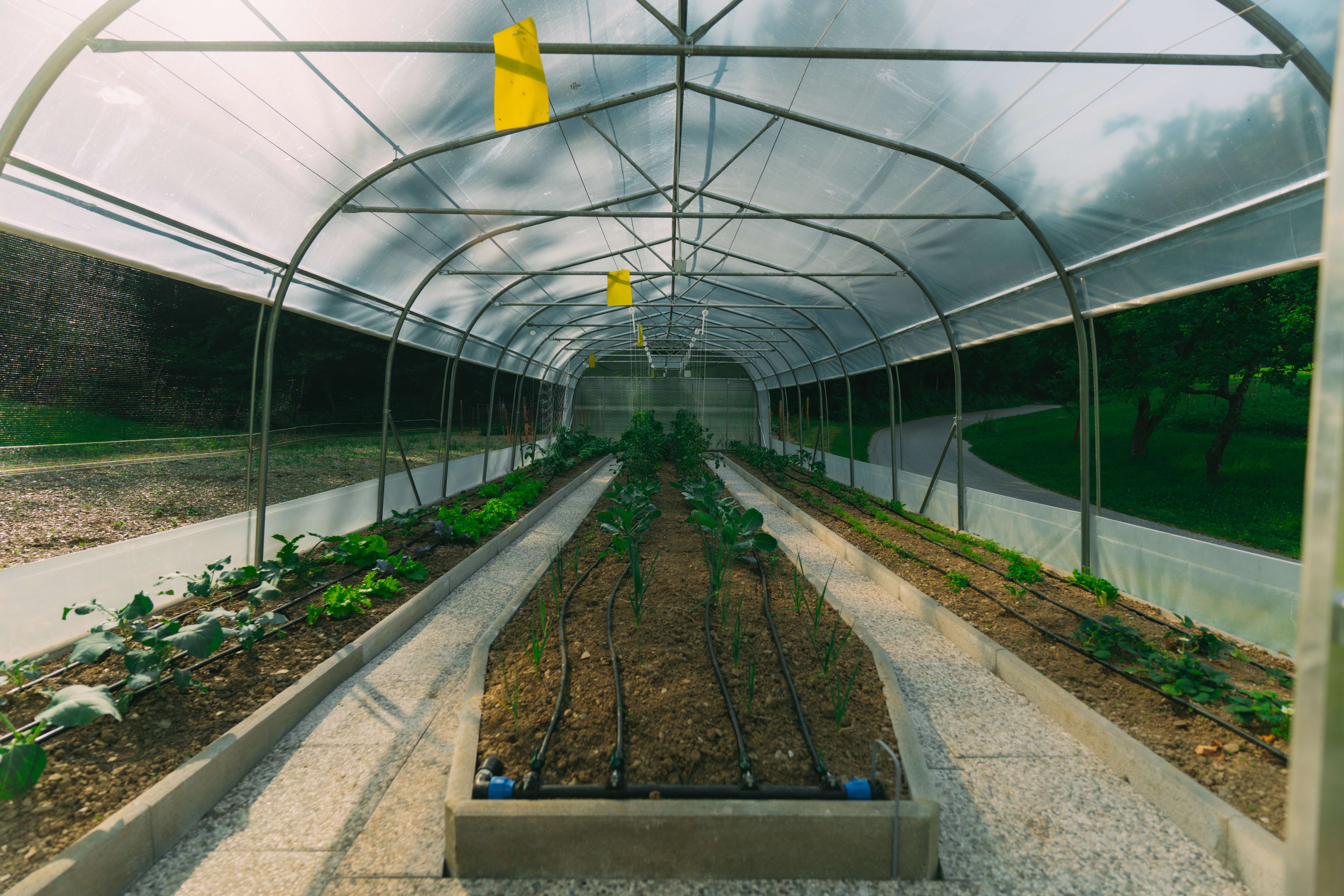
Height is also important – taller greenhouses allow for more comfortable work, better ventilation, and the cultivation of tall-growing plants such as tomatoes and cucumbers. When considering interior space, don't forget that paths take up some of the area, so not all of the space is available for planting beds.
A common mistake is choosing a greenhouse that is too small, as needs often increase quickly. Therefore, it is advisable to think long-term and choose a model that will provide enough space for comfortable work and reliable self-sufficiency. Larger greenhouses are usually more economical as well – the price per square meter is lower, and they allow for easier maintenance of a stable temperature, better arrangement of planting beds, and easier movement. Modern models often offer standing height across the entire surface, which further facilitates cultivation.
General recommendations:
- For basic use: at least 2.5 × 3 m (if there is truly no other option), 3 × 4.5 m is recommended.
- For a family garden: the most common choice in Slovenia is 3 × 6 m or 4 × 6 m.
- For greater variety and seasonal flexibility: a width of 4–5 m and a length of 8 m or more.
A wider greenhouse also means greater height at the sides, which allows for comfortable movement and additional options for hanging pots, climbing plants, or tall varieties of tomatoes.
Construction and materials
The most important thing about a greenhouse is that the structure is sufficiently sturdy. If it collapses, it is in most cases almost impossible to repair, and a new one must be built. Snow and wind pose the greatest danger, which is why choosing high-quality materials is crucial.
The most commonly used are steel or aluminum pipes. Steel can withstand greater loads and provides more stability, especially in snowy winters and windy locations. If it is galvanized, it also has a significantly longer lifespan, as it is protected against rust. Wood and plastic pipes (alkathene) are not suitable because sun and moisture destroy them long before the investment in the greenhouse pays off.
The structure must be additionally reinforced with cross-bracing struts and, if necessary, with wind braces, as this prevents the arches from sagging and increases resistance to wind gusts. A high-quality greenhouse with regular maintenance can last for more than 20 years.
Just as important as the structure is proper anchoring. Even the best greenhouse will not hold up if it is not securely fastened. Therefore, when purchasing, check whether high-quality anchoring elements are included. The most common options are:
- Anchoring into the ground using ground anchors; for greenhouses with film, you can additionally bury the excess film into the ground along the entire length of the side, which further increases stability.
- Anchoring to a concrete or wooden base, where the structure is secured with concrete anchors – a solution that ensures maximum stability and a long service life.
Ventilation and additional equipment
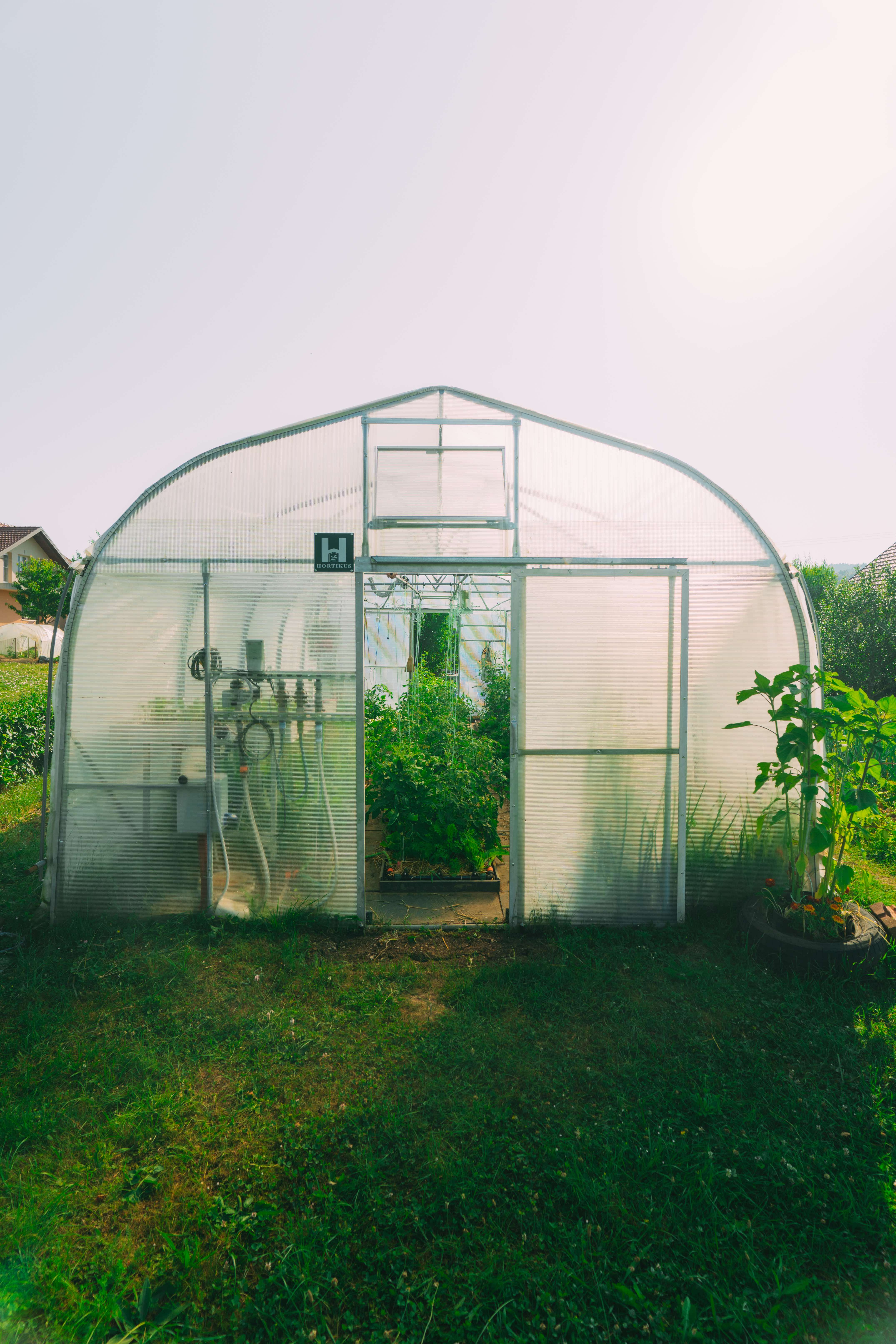
A good greenhouse needs to "breathe." For healthy plant growth, it is essential to have openings for air circulation, preferably in the upper part as well, since heat rises. It is most effective if it can be opened from all sides, with vents also placed in the ridge of the greenhouse.
Warm air is lighter than cold air, so it rises and carries moisture with it in the form of water vapor. When this warm, humid air reaches the highest points of the greenhouse and cools down, droplets form, which then fall back onto the plants. This not only damages young shoots and promotes the development of diseases, but it is also unpleasant for anyone working in the greenhouse, as it drips directly onto your head.
👉 Moisture itself does not rise, but is carried upward by warm air. That is why high-quality ventilation at the top is key to preventing condensation and dripping.
Practical tip
- Vents should be placed as high as possible to allow warm and humid air to escape.
- If there is no ventilation in the ridge, condensation will collect on the roof and drip onto the plants, which harms the crop in the long run and makes working in the greenhouse difficult.
Additional equipment
For better conditions and easier work, you can equip your greenhouse with:
- internal shelving for better space utilization,
- drip irrigation for even water supply,
- a thermometer and hygrometer for monitoring temperature and humidity,
- shading and protective netting for protection against the sun and pests,
- heaters to maintain the right climate all year round.
A greenhouse is more than just a practical addition to your garden – it is an investment in a higher-quality, longer, and more reliable growing season, as well as a space where we can develop our creativity and love for nature. It provides stable growing conditions, protection from the elements, and the possibility of year-round cultivation. With a thoughtful choice of size, quality construction, and proper ventilation, a greenhouse becomes an indispensable partner for every gardener looking to take a step toward greater self-sufficiency and a sustainable lifestyle.